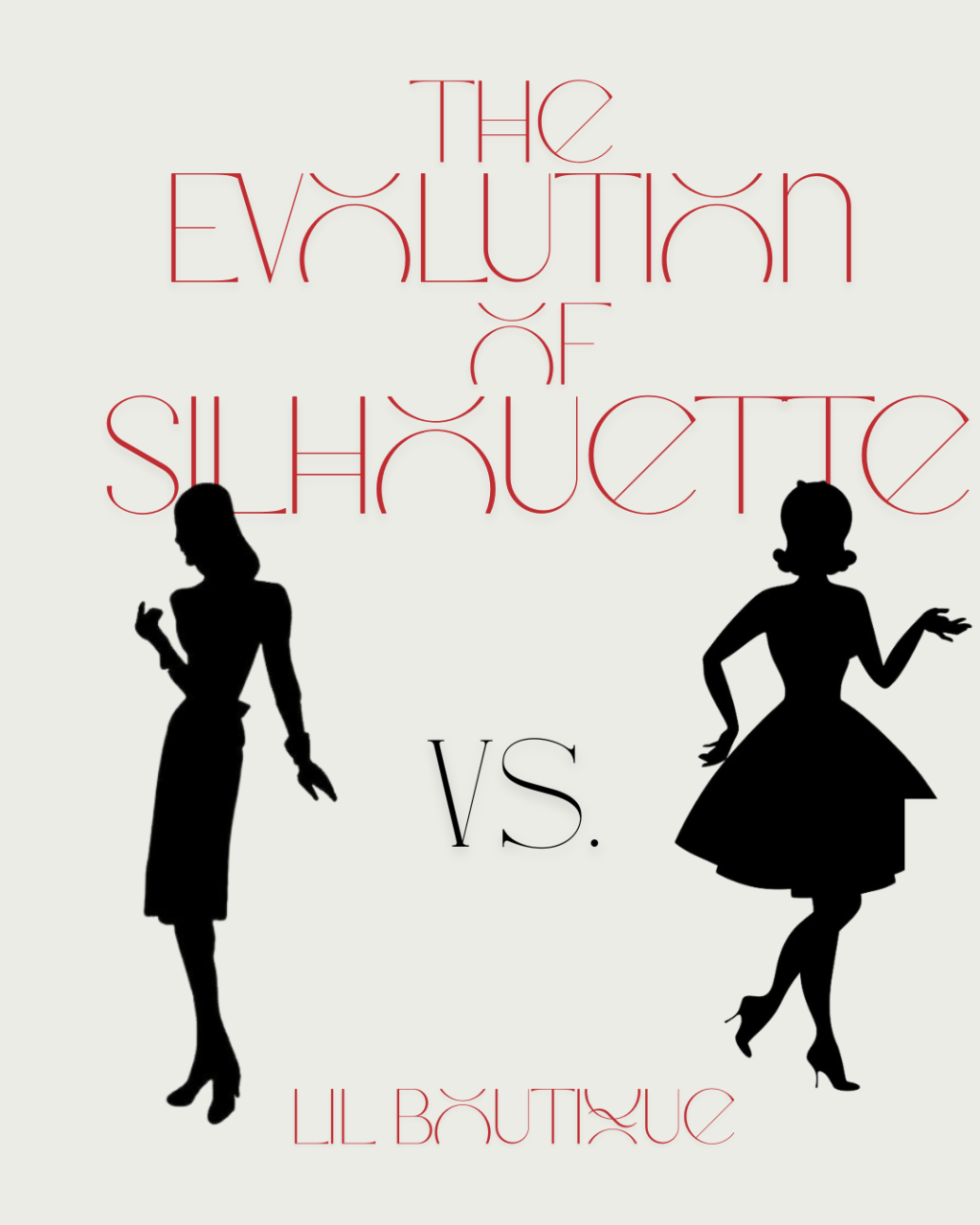
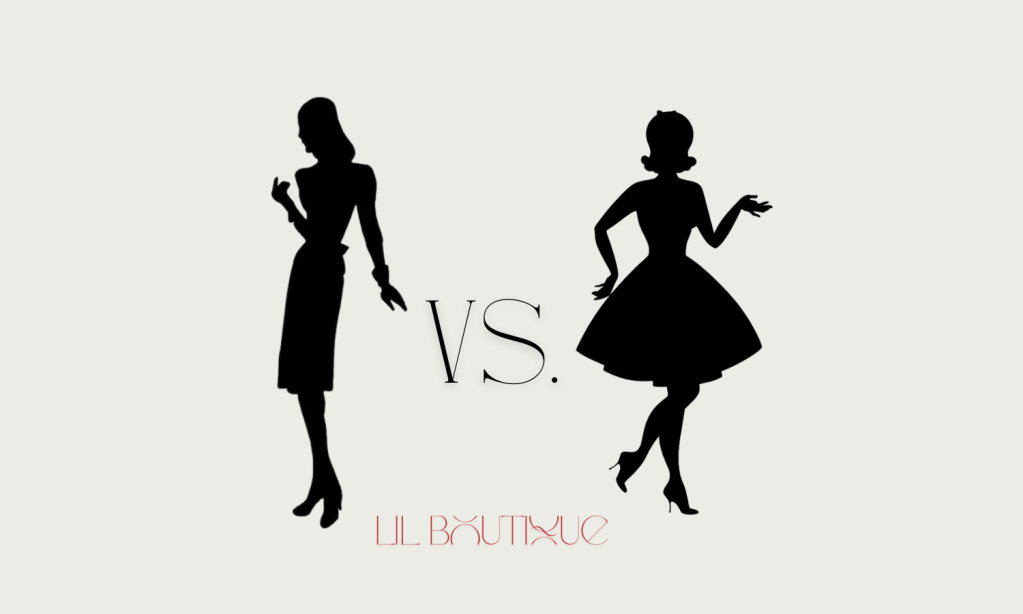
Fashion is a mirror of its time, reflecting societal shifts, economic changes, and cultural moods through fabric, form, and silhouette. The transition from the 1940s to the 1950s marks one of the most dramatic evolutions in 20th-century style, as wartime austerity gave way to postwar optimism. The silhouette—the defining outline of a garment—shifted from the structured, utilitarian lines of the 1940s to the exaggerated femininity and abundance of the 1950s.
The 1940s: Utility and Resilience
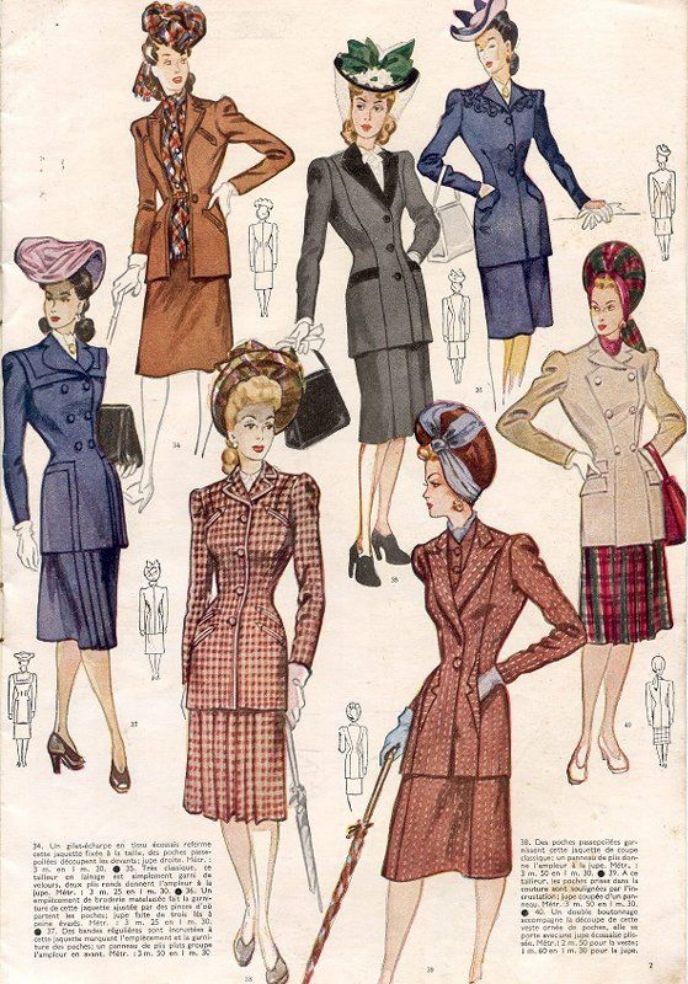
The 1940s were dominated by World War II, and fashion reflected the era’s constraints. Fabric rationing in many countries meant designers had to work with less, leading to a silhouette that was practical and restrained. Women’s clothing adopted a militaristic edge—think broad, padded shoulders, narrow waists, and knee-length skirts. The “utility dress” became a staple, often made from minimal yardage with simple, straight lines. This silhouette wasn’t just about fabric conservation; it symbolized strength and adaptability as women entered the workforce in unprecedented numbers, taking on roles left vacant by men at war.
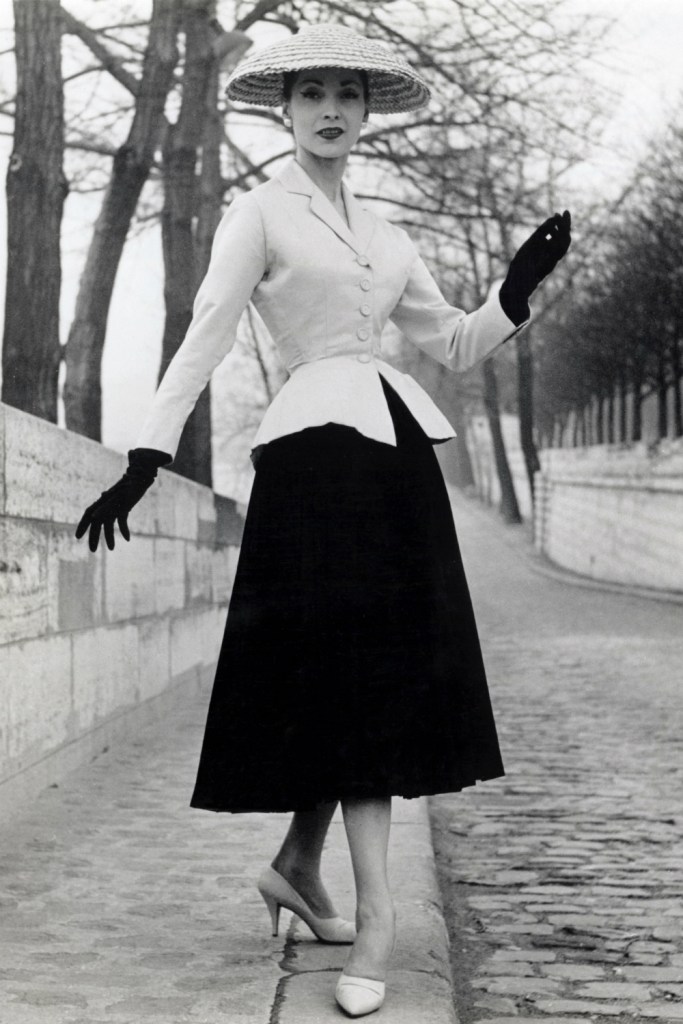
Dior’s 1947 “New Look” technically falls within the decade, but it was a radical departure that foreshadowed the 1950s. Launched just after the war ended, it wasn’t widely adopted until the next decade due to lingering rationing and economic recovery. For most of the 1940s, the silhouette remained boxy and functional, with an emphasis on durability over decoration.
The 1950s: Femininity Reclaimed
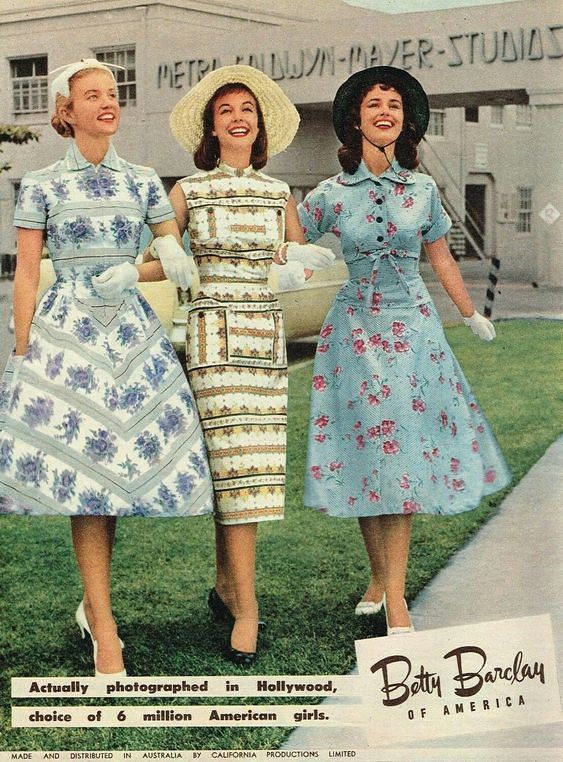
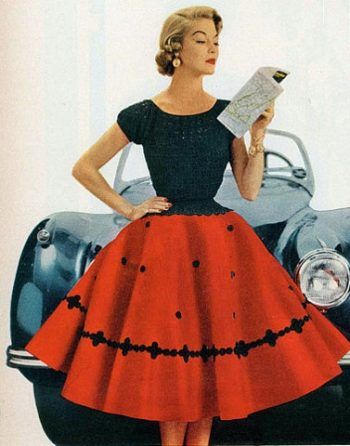
If the 1940s were about survival, the 1950s were about celebration. Postwar prosperity and a desire to return to traditional gender roles fueled a dramatic shift in silhouette. Christian Dior’s “New Look,” with its nipped-in waist, full bust, and voluminous skirts, became the defining image of the decade. Introduced in 1947, it reached its zenith in the 1950s as fabric restrictions eased and consumer culture boomed. The silhouette was an hourglass—soft shoulders, cinched waists, and skirts that flared out dramatically, often supported by crinolines or petticoats.
This wasn’t just a stylistic choice; it was a cultural statement. After years of hardship, the 1950s embraced abundance—more fabric, more glamour, more femininity. Women, many of whom had been factory workers or wartime contributors, were now encouraged to return to domestic life, and fashion reinforced this shift. The exaggerated curves of the 1950s silhouette stood in stark contrast to the angularity of the previous decade, signaling a rejection of wartime austerity and a return to idealized beauty standards.
What Drove the Change?
The shift wasn’t arbitrary—it was deeply tied to the times. The end of rationing allowed designers to experiment with excess, and technological advances in textiles, like synthetic fibers, made voluminous styles more accessible. Economically, the 1950s saw a consumer boom, particularly in the United States and Western Europe, where ready-to-wear fashion took off. Culturally, the postwar baby boom and suburban ideal pushed a narrative of domesticity, which fashion echoed with its ultra-feminine forms.
Designers like Dior, Balenciaga, and Givenchy capitalized on this moment, but it wasn’t just high fashion. Everyday women embraced the silhouette through swing dresses, pencil skirts (a slimmer alternative), and tailored suits that still nodded to the hourglass ideal. Hollywood amplified the trend—think Marilyn Monroe’s curves or Grace Kelly’s elegance—cementing the 1950s silhouette as a symbol of glamour.
A Lasting Legacy
The move from the 1940s to the 1950s wasn’t just a change in shape; it was a transformation of spirit. The structured, no-nonsense lines of the wartime years gave way to a silhouette that reveled in beauty and excess, reflecting a world ready to rebuild and rejoice. Even today, the 1950s hourglass remains a touchstone in fashion, revived in vintage-inspired designs and red-carpet looks. It’s a reminder of how closely silhouette ties to the stories we tell about ourselves—and how quickly those stories can change.
What do you think—would you wear the bold shoulders of the 1940s or the full skirts of the 1950s? Fashion may evolve, but its power to capture a moment endures.
Where to Find It Now?
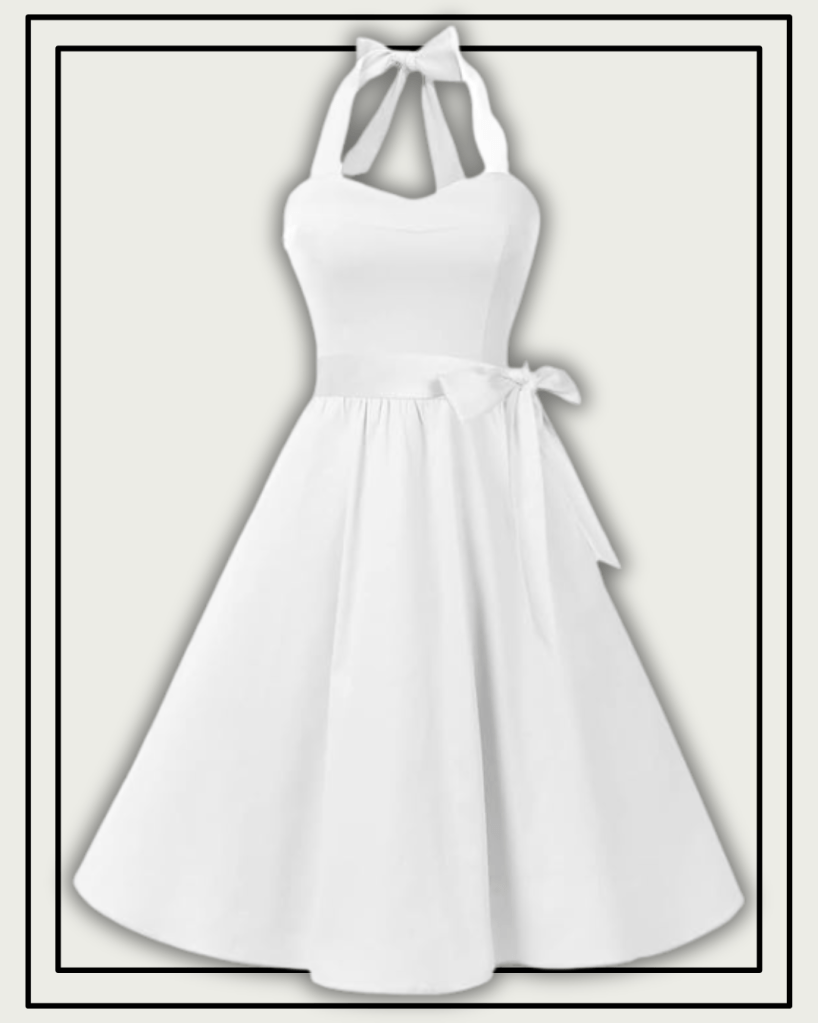
Fortunately, vintage-inspired fashion can still be found even in our modern times. This adorable vintage-inspired halter dress on Amazon is perfect for a a date night to the movies or a picnic in the park.
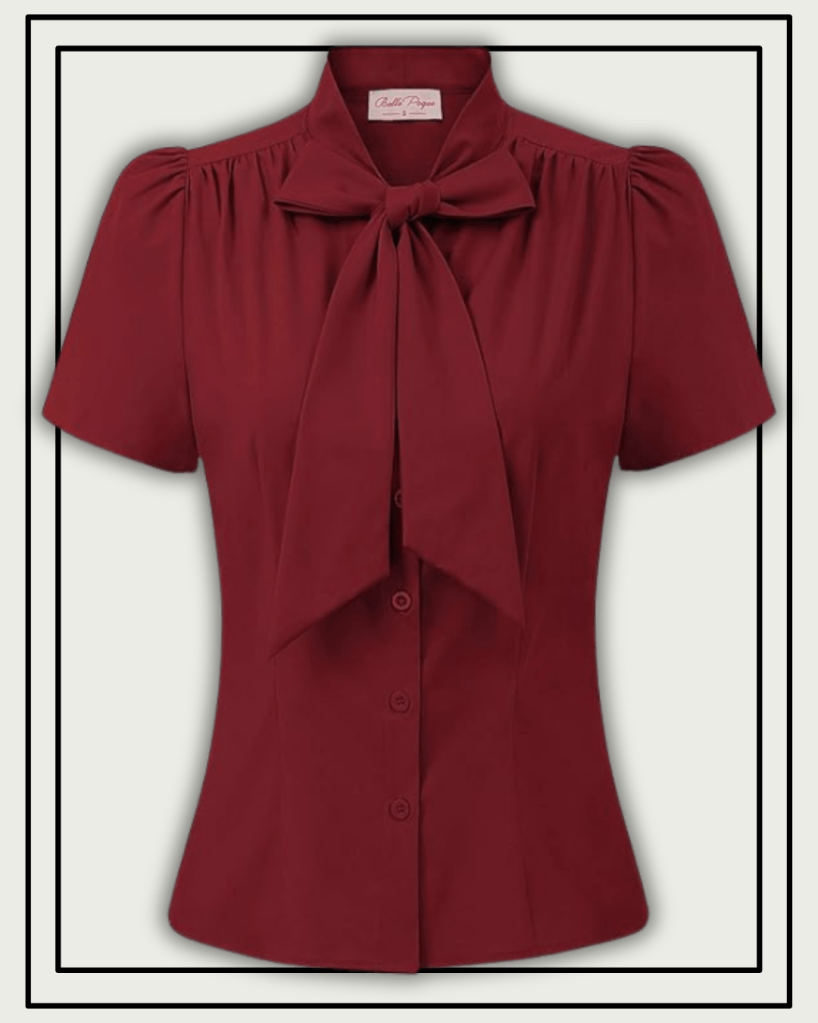
Or, if you’re looking for something that lends more business chic, an elegant 1940’s inspired shirt for the office.


 Lil Boutique
Leave a comment